Our simple but powerful framework of four AI archetypes helps guide decisions, sequencing and investments in your AI portfolio. It reveals the hidden structure behind a modern AI strategy.
Two Strategy AI Decisions
Many companies are today overwhelmed with the AI opportunity space and the pace at which it is transforming industries. Yet they struggle to timely establish the AI capabilities. AI strategy is often discussed in terms of tools, models and pilot use cases, but this framing misses the underlying structure that actually determines strategic outcomes.
At its core, AI strategy is about how organizations combine two fundamental decisions:
- What data the AI model is trained on
- Who owns the AI model
These two dimensions define the architecture of any AI system.
Definition: An AI System is a business system enabled by a technology stack that combines processes, data, models, and infrastructure, to deliver AI-driven business capabilities and value.
The combinations of data origin and model ownership is what we call the archetypes of AI systems.
From Archetypes to AI Portfolio Design
Each archetype carries unique trade-offs across the AI portfolio, making the framework useful for decision-making and AI portfolio roadmap design.
- Differentiation: Ability to differentiate existing businesses from competitors vs. leveraging market capabilities, including implications for time-to-market and durability of the competitive advantage
- Efficiency: Linear vs. scalable performance of the AI deployment as the business grows
- Control: Degree of internal ownership of AI assets vs. reliance on external parties for model and data
- Cost: Level of investment and operational cost across the full lifecycle of AI systems
- Risk: Degree of exposure to uncertainties, dependencies, and operational complexities over time
These archetypes are not theoretical categories, they directly map to how organizations should allocate resources and build AI capabilities.
Seen through this lens, an AI portfolio design becomes less about managing individual initiatives and more about balancing a portfolio of AI system archetypes, each playing a different strategic role and providing different benefits. Some systems are designed for scale and efficiency while others give strategic edge.
Four AI System Archetypes
The following four AI archetypes define the core structural patterns of modern AI systems. Each archetype reflects a different configuration of data and model ownership, shaping how value is created and controlled, see Exhibit 1.
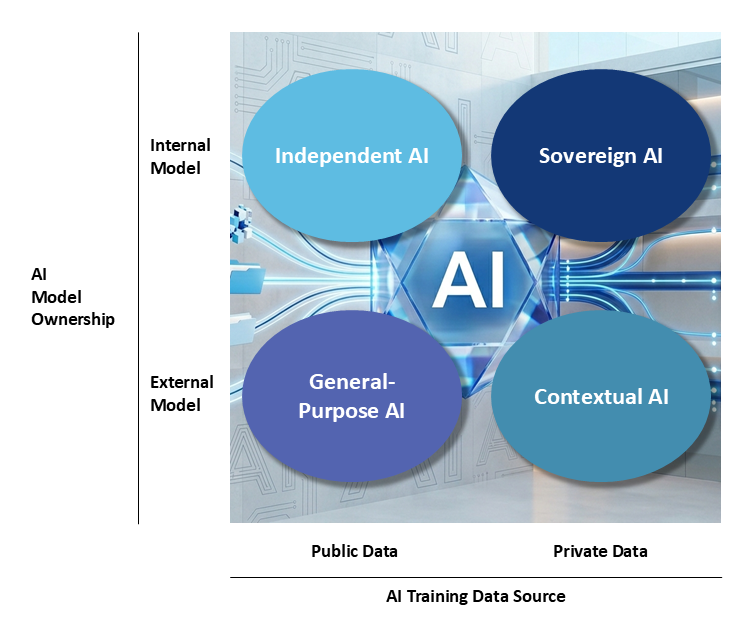
Exhibit 1: The Four AI System Archetypes
Definition: An AI System Archetype is a recurring structural pattern of an AI system, defined by the origin of its data and the ownership of its model, which determines how the system creates value, is governed, and evolves over time.
Note: AI archetypes describe system design, not usage context. For example, the same General-Purpose AI system can operate in a Contextual AI mode when grounded in private or structured data.
General-Purpose AI
The archetype is a combination of external model and public data.
In this archetype, AI capabilities rely entirely on externally provided models trained on broadly available public data. The resulting capability is externally defined and widely accessible. These systems provide high efficiency at relatively low cost but offer limited differentiation and control.
Examples:
- Generic chatbots (e.g., ChatGPT, Claude)
- Coding assistants (e.g., Claude Code)
- Productivity tools (e.g., Perplexity AI, Scopus AI)
Contextual AI
The archetype brings together an external model and private data.
In this archetype, organizations combine external models with proprietary data accumulated over time. The model is not owned, but its outputs are grounded in internal context. Value comes from integrating proprietary data into externally defined capabilities.
This is the most common enterprise pattern today.
Examples:
- Enterprise chatbots on internal data
- Workspace assistants (e.g., Microsoft Copilot, Notion AI).
Independent AI
The archetype combines an internal model and public data.
Organizations own the model, control its weights, behavior and inference logic, while relying on public data sources for training. They also owned the learned intelligence. The result is an internally controlled capability built on generally available knowledge.
Examples:
- Financial analysis agents (e.g., Bloomberg AI)
- Academic models (e.g., Alan Turing Institute AI)
- Domain-specific research models (e.g., Foresight AI)
Sovereign AI
The archetype unites an internal model with private data.
In this archetype, both data and model are fully internalized. Organizations control the full AI stack (data, model, training, and deployment). This enables the highest degree of strategic differentiation and a high level of autonomy. These systems provide strong competitive advantage but require significant investment and operational maturity. Therefore they also represent a more risky option than other archetypes.
Examples:
- Proprietary enterprise AI platforms for (e.g., JPMorgan AI)
- State-led AI programs in defense and healthcare (e.g., France)
A Retail Banking Industry Example
The AI archetype framework is applicable to all industries. Based on recent experiences, we have exemplified the AI opportunities in Retail Banking in exhibit 2. It is clear that the AI footprint both touches the customer interface/front office, middle office and back-office of a typical retail bank.
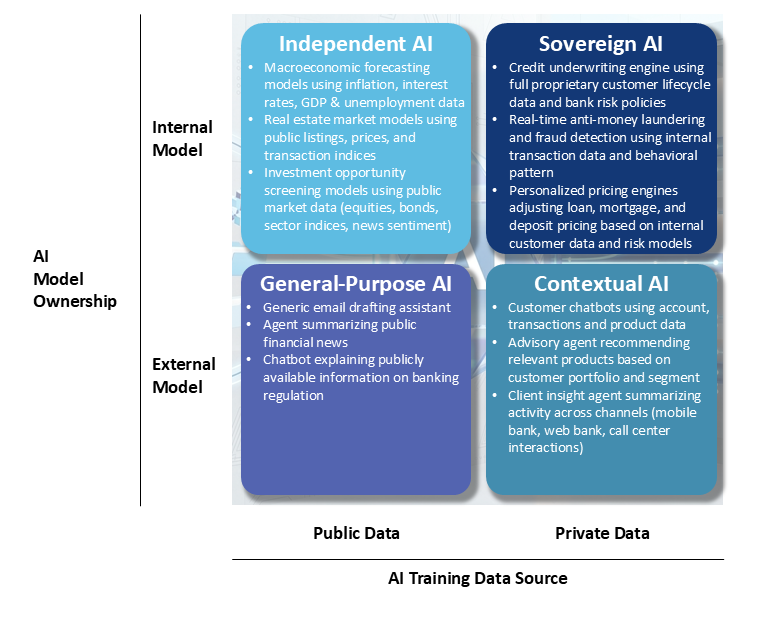
Exhibit 2: Example of Applied AI Archetypes Retail Banking
General-Purpose AI in Retail Banking
Used for generic productivity and non-sensitive customer interactions in banks.
Examples:
- Generic email drafting assistant
- Agent summarizing public financial news
- Chatbot explaining publicly available information on banking regulation
Contextual AI in Retail Banking
Value comes from internal data grounding with external models. Most common enterprise banking pattern currently.
Examples:
- Customer chatbots using account, transactions and product data
- Advisory agent recommending relevant products based on customer portfolio and segment
- Client insight agent summarizing activity across channels (mobile bank, web bank, call center interactions)
Independent AI in Retail Banking
The bank owns the model, while using public financial and economic data for proprietary reasoning and prediction.
Examples:
- Macroeconomic forecasting models using inflation, interest rates, GDP, and unemployment data
- Real estate market models using public listings, prices, and transaction indices
- Investment opportunity screening models using public market data (equities, bonds, sector indices, news sentiment)
Sovereign AI in Retail Banking
The bank has full-stack control over data, model, and deployment for core competitive systems.
Examples:
- Credit underwriting engine using full proprietary customer lifecycle data and bank risk policies
- Real-time anti-money laundering and fraud detection using internal transaction data and behavioral pattern
- Personalized pricing engines adjusting loan, mortgage, and deposit pricing based on internal customer data and risk models
AI strategy is nor a tool, neither a data selection exercise, it is a portfolio design challenge. The four AI archetypes provide a simple structure to navigate complexity and guide investment decisions. Those who understand and apply this structure will shape the next generation of competitive advantage.
About the author:
Ole Toft is a Senior Partner at Oleto Associates, a boutique strategy and technology consulting firm based in Denmark.
This article was exclusively human-inspired and human-drafted. During the process it has been AI-augmented, using General-Purpose AI for proof reading and Contextual AI for refinement.
April 2026